Where is my next meal coming from?
Food security is a complex topic that includes both the access to food and the quality of the nutrition available in a given area. According to the most recent report from the World Health Organization, an estimated 673 million people experience hunger across the globe,1 and the biggest factor remains the high cost of global food prices.
A related report from the United Nations2 states that “low-income countries have borne the brunt of rising food prices” as the percentage of people experiencing moderate and severe food insecurity rises with food inflation..
Guatemala has the second highest rate of moderate or severe food insecurity of all the countries in Central and South America. When someone reaches moderate food insecurity they are uncertain about their ability to obtain food and have been forced to reduce the quantity or quality of food they consume. A severe level means they have run out of food, experienced hunger and gone without food for a day or more.
Four factors contribute to someone’s level of food security: use, access, availability and stability. “Use” refers to people’s ability to prepare food in a hygienic manner, which includes access to clean water and fuel. “Access” and “availability” refer to the general provision of food in the region and can be affected by conflict, climate, transportation, inflation and natural disasters. “Stability” depends on the other three factors in the equation and drops dramatically when one of the other factors is affected.
With irregular and informal income, communities affected by the lack of sanitary drinking water, and frequent drought in an area that depends on agricultural production, many of the students at Escuela Integrada are left with the question: “Where is my next meal coming from?”
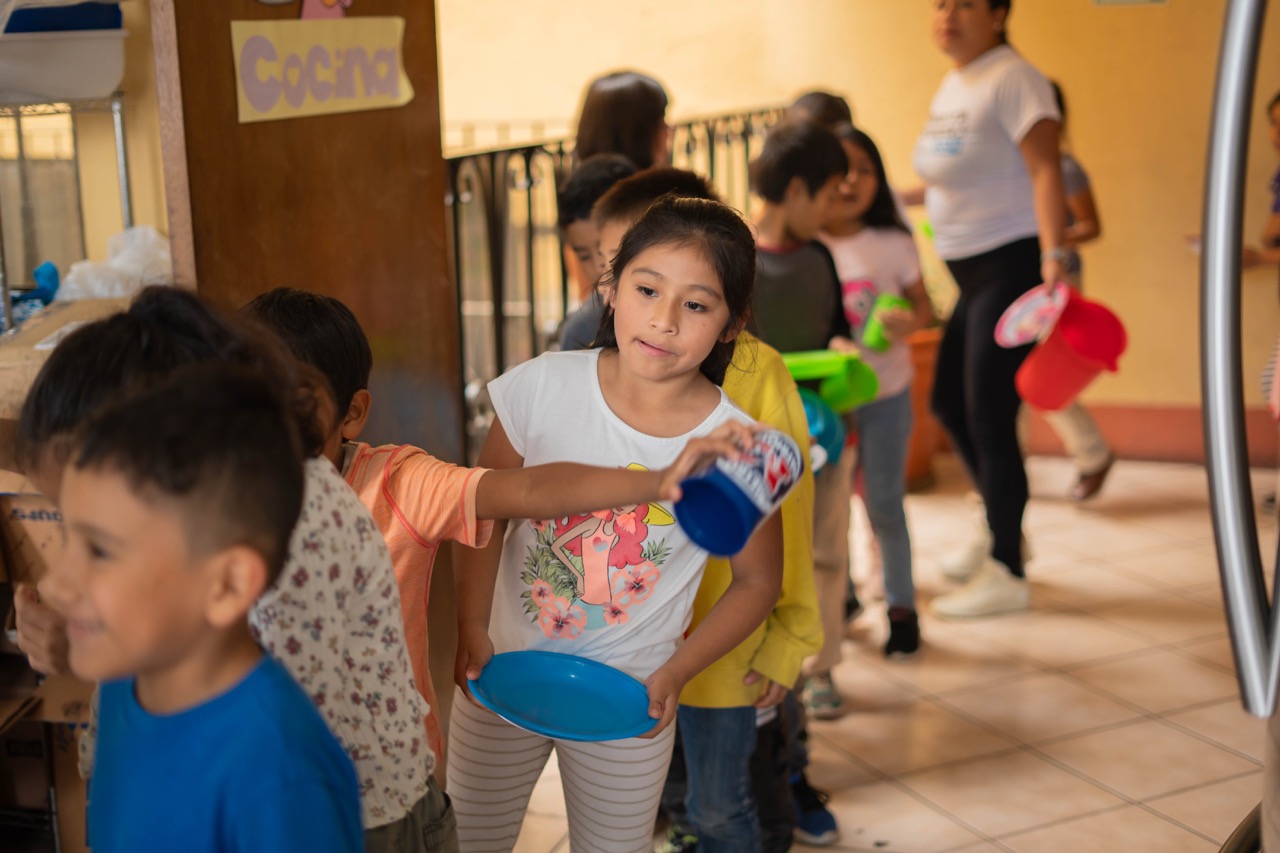
Thankfully, we are able to answer this question with a resounding, “At school!” every single day at Escuela Integrada.
It remains a critical piece of our mission to feed the children we educate. We have deep knowledge of their family systems and struggles, and their most critical need is food. Every child eats two meals packed with nutrition and receives supplemental food assistance during the months the school is closed.
Each year, food is our biggest line item on the annual budget because without food, learning is impossible. Our year-end goal is to raise enough support to provide 35,000 meals at Escuela Integrada. This will get us well on our way toward making sure none of the children we serve will go without food in 2026.
Will you help us provide 35,000 meals? At a cost of $1.50 per meal:
- $15 feeds one student for one week
- $300 feeds a class (20 students) for one week
- $2550 feeds the entire school (170 kids) for one week
Your year-end donation is a tax deductible way to ensure kids at Escuela Integrada do not have to worry about where their next meal is coming from. One hundred percent of funds raised for this program will go directly to keeping the children fed.
Thank you for your participation in helping GRACES Feed the Future!
Sources:
1https://www.who.int/news/item/28-07-2025-global-hunger-declines-but-rises-in-africa-and-western-asia-un-report
2https://www.fao.org/newsroom/detail/un-report–low-income-countries-hit-hardest-by-global-food-price-inflation/en
- Dec. 25: Merry Christmas!
- Dec. 31: Last day to make a tax-deductible year-end gift to help GRACES Feed the Future.